Our brain and body are designed to keep us safe from danger. You’re naturally wired to detect anything that feels threatening and to respond automatically. This survival system was essential for early humans who faced physical dangers daily.
Although life looks very different now, our brains still use the same alarm system. Instead of wild animals, modern “threats” might be things like work pressure, relationship difficulties, financial worries, or uncertainty about the future.
When your brain senses danger—real or imagined—it activates your survival responses: fight, flight, or freeze. Your body then releases stress hormones like adrenaline and cortisol, which increase your heart rate, quicken your breathing, tense your muscles, and slow digestion so that all your energy can go toward staying safe.
If this system is triggered repeatedly, your body can get stuck in a state of high alert. Over time, this can lead to a cycle where feeling anxious makes your body tense, and your tense body keeps signalling danger back to your brain. This loop can feel exhausting and may contribute to physical symptoms such as IBS, headaches, muscle pain, or sleep problems.
Understanding anxiety: when the mind and body stay on alert.




Trauma happens when something threatens our sense of safety — physically, emotionally, or both. It can come from many different experiences, and no two people are affected in the same way.
Trauma isn’t always about one big event. Sometimes, it’s lots of smaller experiences that happen over time and gradually wear us down. For example:
These experiences might seem “small” on their own, but repeated over months or years, they can leave a deep mark.
When trauma isn’t fully processed, it can show up in the body and nervous system in all sorts of ways — feeling constantly on edge, finding it hard to concentrate, struggling with sleep, digestion, or unexplained pain and tension.
What is trauma and how it affects the nervous system?
Trauma happens when something threatens our sense of safety — physically, emotionally, or both. It can come from many different experiences, and no two people are affected in the same way.
Trauma isn’t always about one big event. Sometimes, it’s lots of smaller experiences that happen over time and gradually wear us down. For example:
These experiences might seem “small” on their own, but repeated over months or years, they can leave a deep mark.
When trauma isn’t fully processed, it can show up in the body and nervous system in all sorts of ways — feeling constantly on edge, finding it hard to concentrate, struggling with sleep, digestion, or unexplained pain and tension.
What is trauma and how it affects the nervous system?
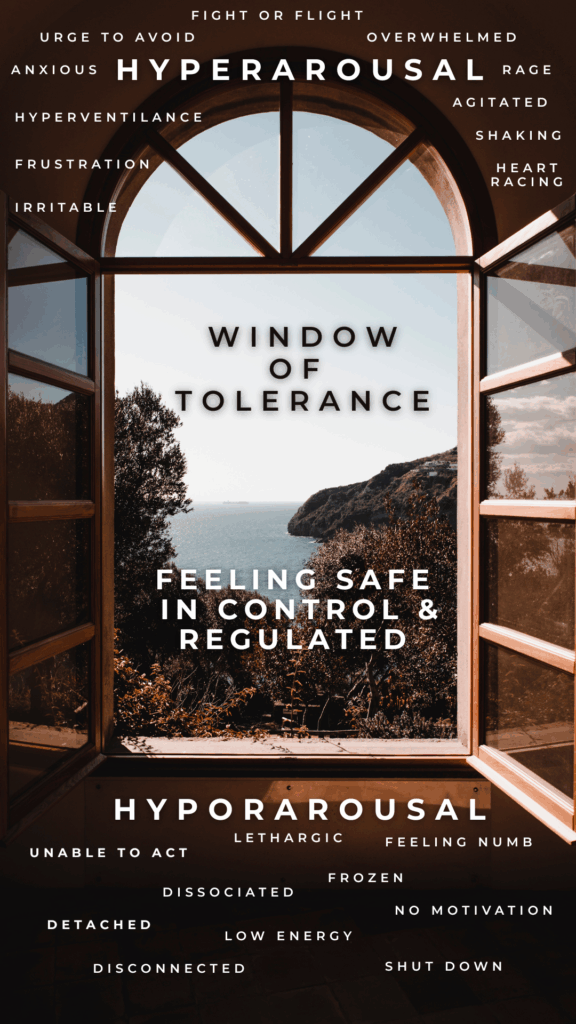
The Window of Tolerance
The Window of Tolerance describes the optimal zone where we can manage emotions, think clearly, and stay connected to ourselves and others. Within this window, we’re able to handle life’s challenges without becoming overwhelmed or shutting down.
For people who have experienced trauma or ongoing stress, staying within this window can be more difficult. The body and mind may move into hyperarousal (feeling anxious, reactive, or on edge) or hypoarousal (feeling numb, disconnected, or frozen). These shifts aren’t signs of failure — they are protective survival responses developed to help us cope.
Over time, factors such as poor sleep, prolonged stress, physical illness, anxiety, poor nutrition, grief, rejection, or pressure can narrow the window of tolerance, making emotional regulation harder.
The good news is that the window can expand again. Supportive practices like therapy, movement, grounding, breathing, time in nature, creative hobbies, music, and meaningful social connection can help the nervous system find safety and balance once more.
Self-Soothing and Grounding Tools
These practices offer gentle ways to steady yourself when anxiety, fear, or overwhelm take hold.
They’re not a quick fix, but small acts of care that help your body and mind reconnect to safety.
With regular practice, self-soothing and grounding can restore a sense of calm, presence, and trust in your ability to cope.
Take a minute to try this guided meditation to help you pause, slow down and reset.
Self-Soothing and Grounding Tools
These practices offer gentle ways to steady yourself when anxiety, fear, or overwhelm take hold.
They’re not a quick fix, but small acts of care that help your body and mind reconnect to safety.
With regular practice, self-soothing and grounding can restore a sense of calm, presence, and trust in your ability to cope.
Take a minute to try this guided meditation to help you pause, slow down and reset.
When anxiety rises, your body shifts into survival mode — your heart races, your breath shortens, your muscles tighten. This is your body’s way of preparing for danger. While you can’t directly control your heart or adrenaline, you can influence your breath.
By slowing and steadying your breathing, you send a powerful signal to your nervous system: “I’m safe.”
This gentle shift activates your body’s natural calming system — helping you return to a state of rest, balance, and grounding.
Even a few mindful breaths can begin to ease tension and bring you back into the present moment.
5-4-3-2-1 Grounding Technique
Use this to calm your mind and bring yourself back to the present moment:
Take a slow, deep breath in and out — remind yourself:
👉 “I’m here. I’m safe. This moment will pass.”